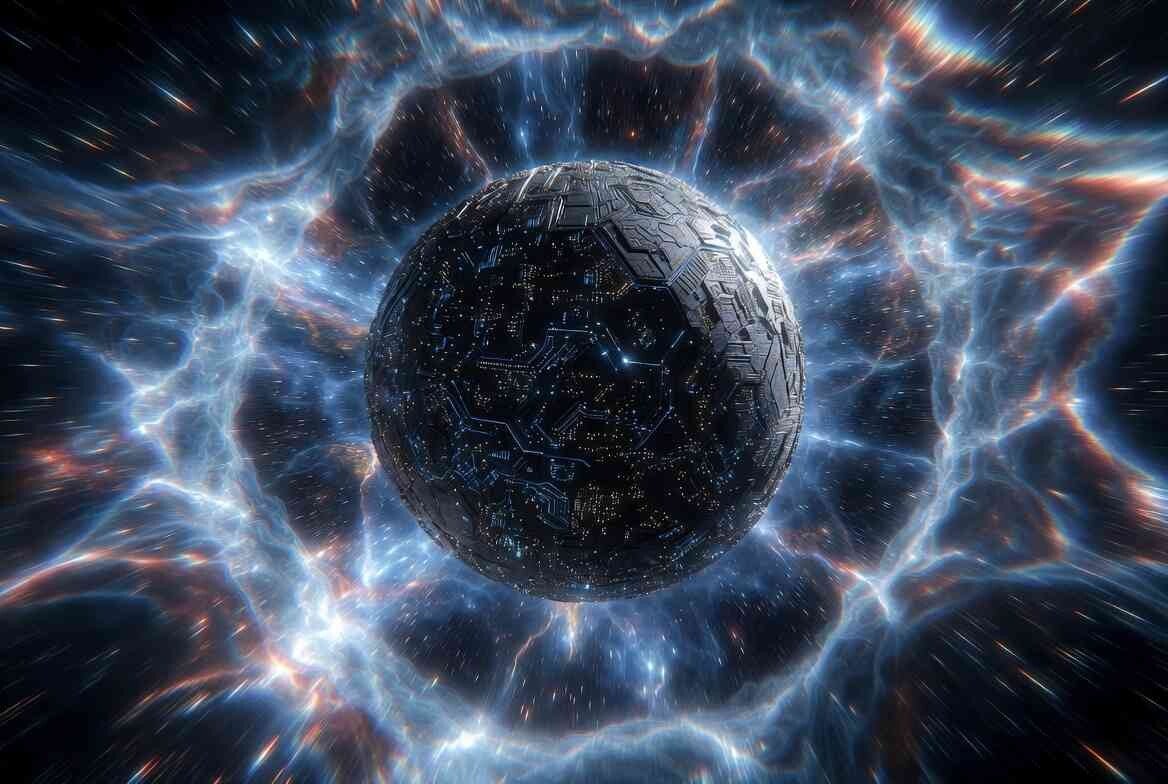
Explore the TITAN Star ship concept
Welcome to the future of space travel and sustainable energy. Discover the revolutionary TITAN Starship, a concept designed to redefine how we power our world and explore the cosmos. This isn't just a ship; it's a living system, powered by cold and recycled heat, built for a hopeful future.
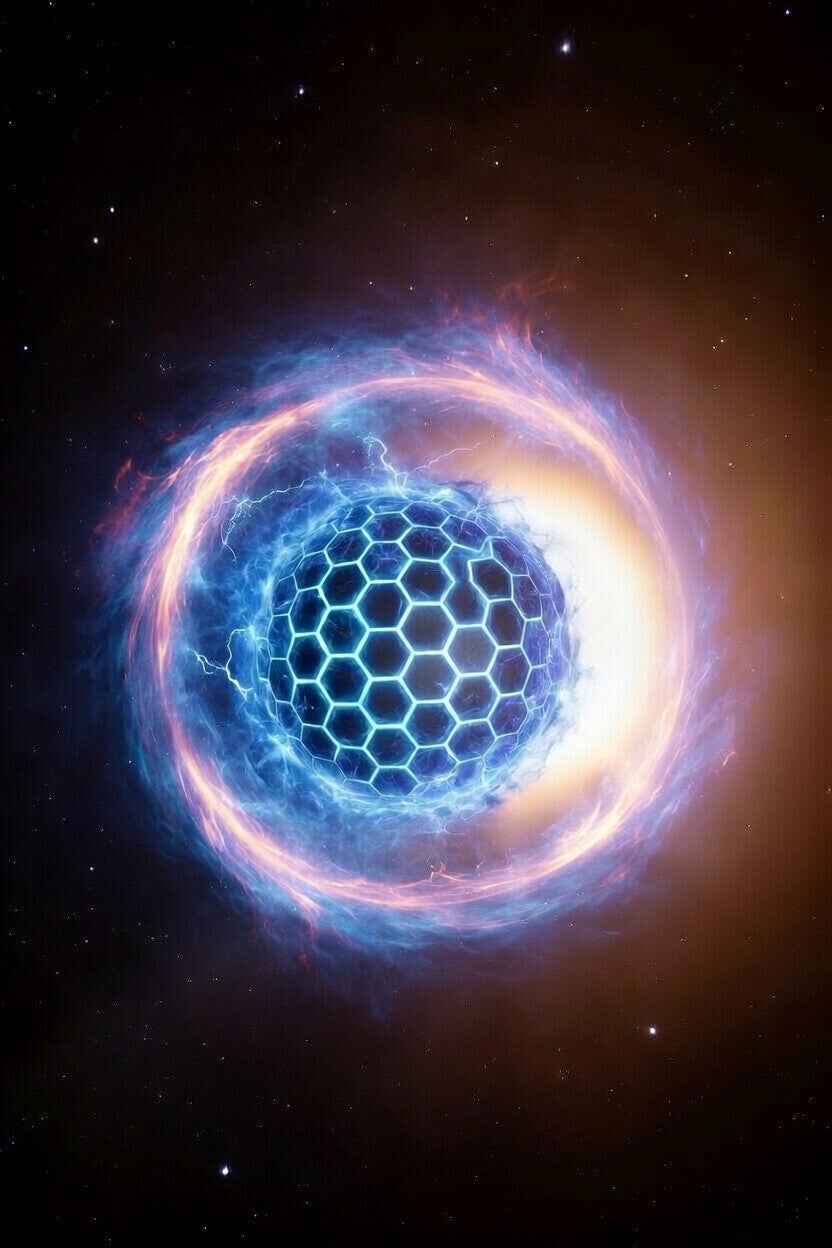
What is the TITAN Starship?
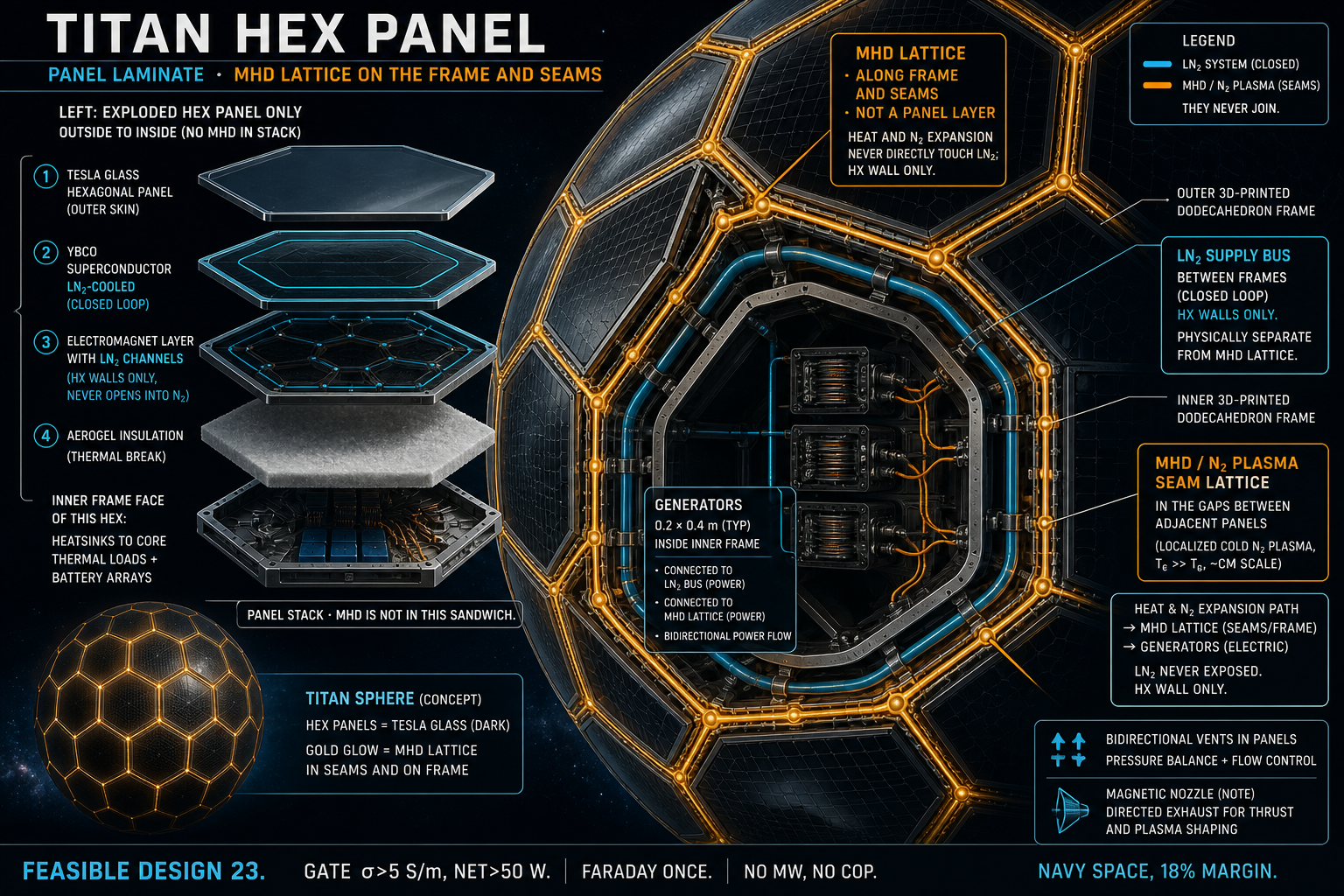
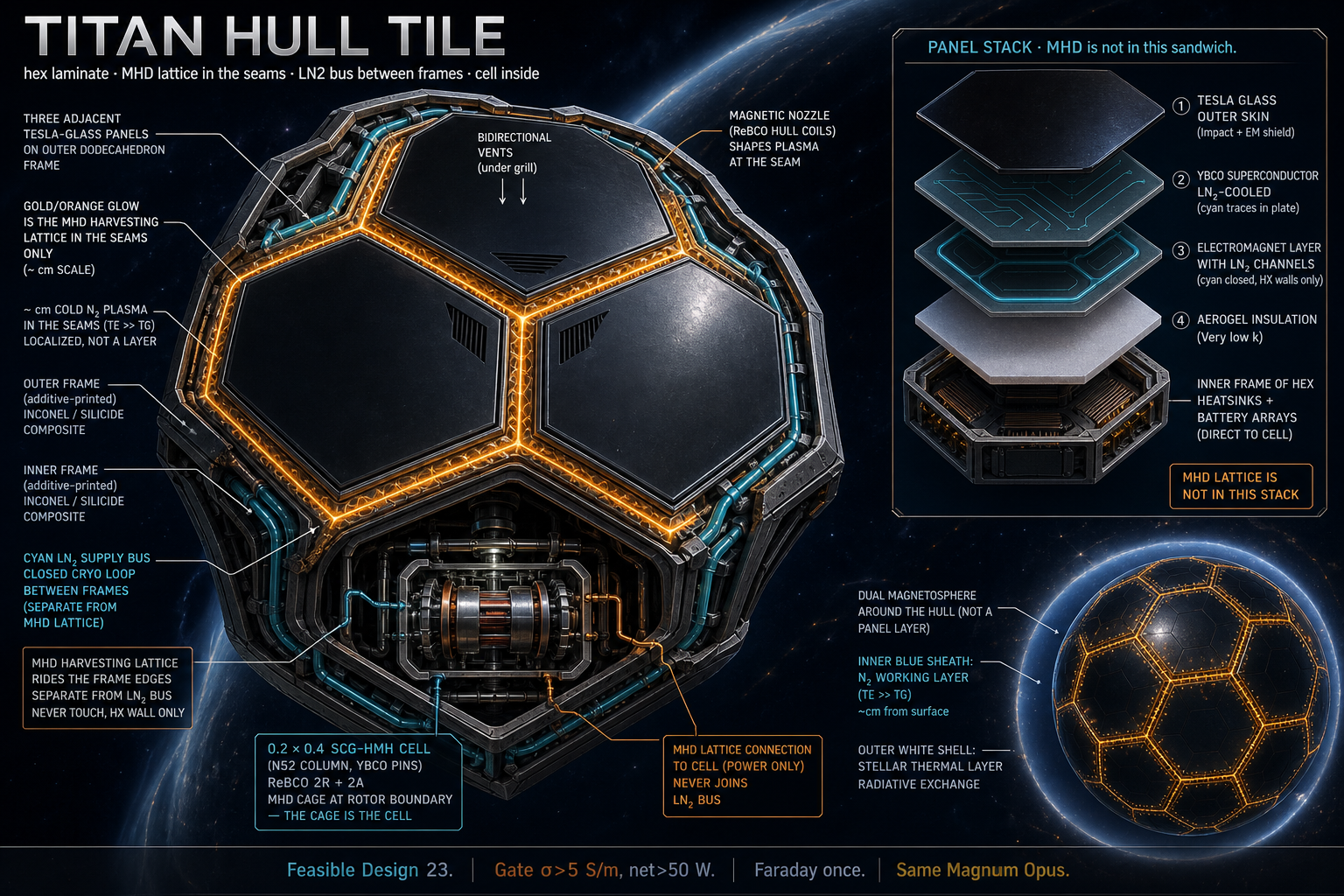
Imagine a ship that doesn’t burn fuel the way a rocket does. Instead, it runs on cold and leftover heat. That’s the published idea behind SCG-HMH + TITAN. The heart of this system is the generator (SCG-HMH), a small spinning drum, about the size of a chunky thermos, levitating in mid-air thanks to superconducting magnets. Liquid nitrogen cools these magnets and acts as the "working stuff," similar to water in an old steam engine. You add heat—from factory waste on Earth, sunlight on the hull in space, or even heat from computers. The nitrogen boils and expands dramatically, creating a rush of gas that can spin the rotor and shoot out a nozzle like a cold jet. Later layers incorporate superconducting coils and special cold plasma, allowing the same flow to generate electricity. The system operates as one continuous loop: heat in → nitrogen expands → spins, jets, and powers → leftover cold is then reused. In space, radiators direct this cold towards the naturally low temperatures of deep space.

Who is this page for?
This page welcomes everyone, from curious minds to seasoned professionals. If you look up at the sky and wonder about a hopeful future—a cold engine, a round ship, energy from heat we already discard—you belong here. For ordinary people concerned about the cost of living, climate change, and their children’s future, the SCG-HMH’s primary role is practical: converting waste heat from factories, grids, and data centres into power, while simultaneously using the same nitrogen loop for cooling. Cheaper, cleaner energy on Earth forms the foundation for what this ship might become. Students of physics, engineering, cryogenics, or those interested in how grand ideas become initial experiments will find a public design to explore, question, and grow with. Engineers and builders are crucial for Phase-1, needing expertise in machining rotors, quenching bearings, plumbing liquid nitrogen, testing nozzles, and managing high-RPM systems.
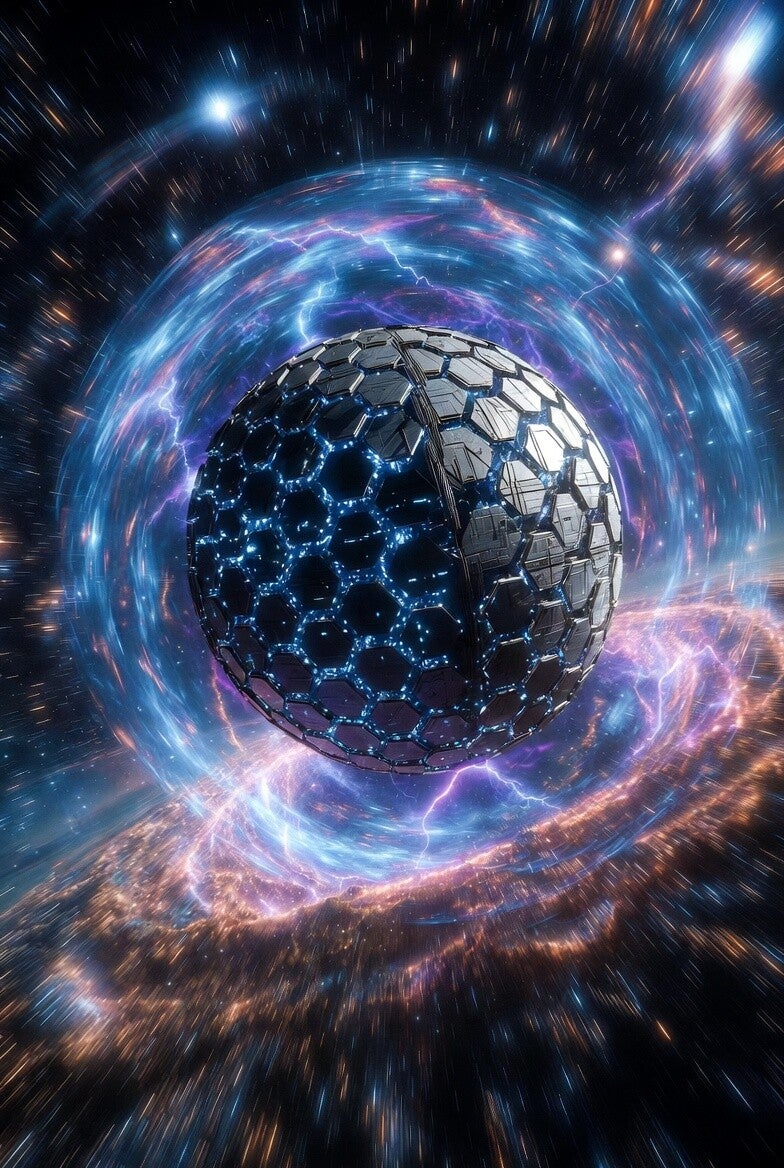
Key innovations of the TITAN Starship
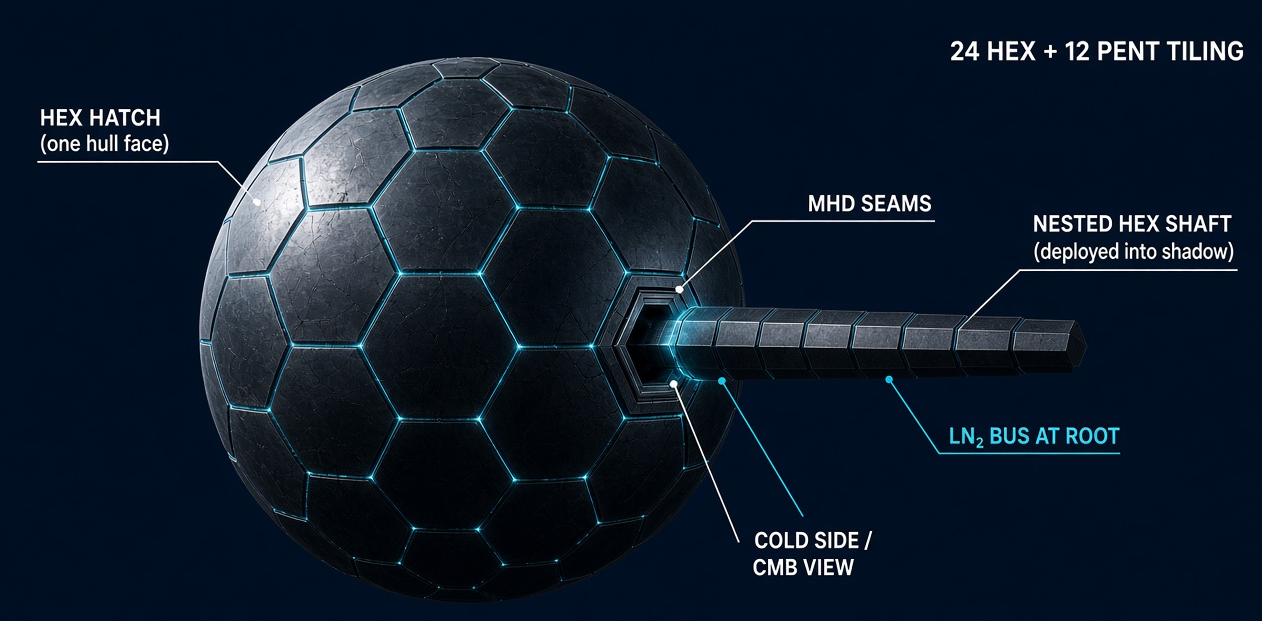
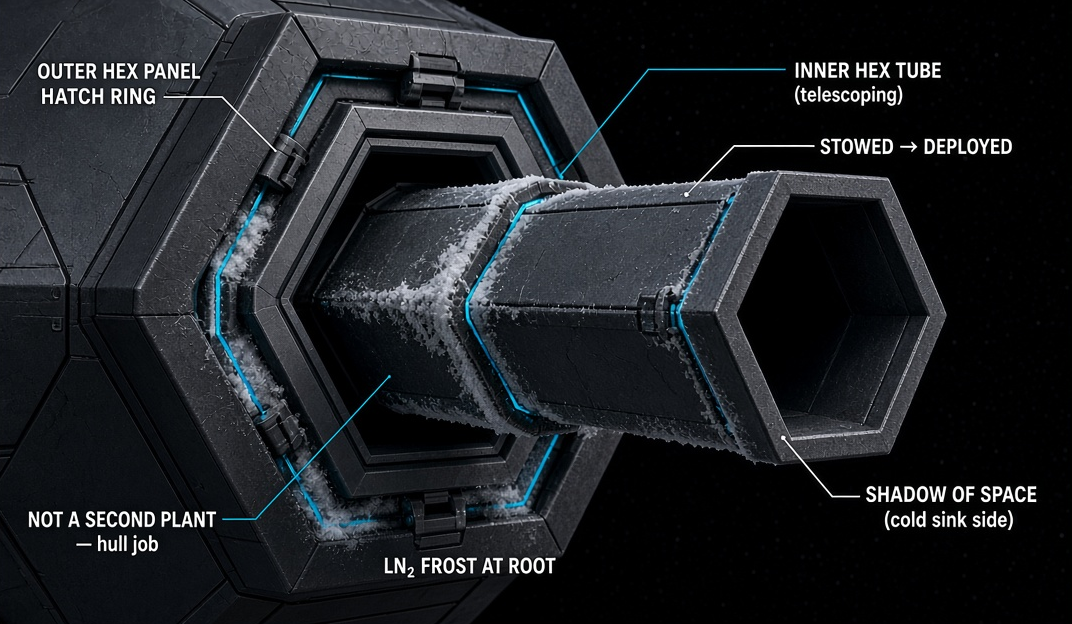
The TITAN Starship is not merely a vessel; it is an engine. Its unique design features several impressive aspects. Firstly, the hull serves four simultaneous functions: it catches starlight, carries liquid nitrogen in its channels, provides shelter for the crew, and houses superconducting coils. Structure, radiator, habitat, and shield are all integrated into one object. Secondly, a single cold fluid, nitrogen, runs the entire system. It cools the floating superconducting bearings, expands through the generator and a nozzle for thrust, and can be replenished from Titan's atmosphere, comets, or icy moons. This eliminates the need to haul separate 'fuel,' 'coolant,' and 'power plant' components. Thirdly, the TITAN is designed to thrive on leftover heat. Waste heat from computers, life support, and even the Sun is not something to be dumped but is actively utilised to boil the working fluid. The more the ship thinks and lives, the more heat enters the loop. Lastly, deep space itself acts as the cold tap. With temperatures near 3 degrees above absolute zero, TITAN efficiently dumps entropy into this cold vacuum, sustaining its cycle.