

Unlocking the future of clean energy
Welcome to the world of the SCG-HMH Generator, a revolutionary concept designed to transform waste heat into abundant, clean power. Discover how this innovative technology works and its profound implications for our energy future.
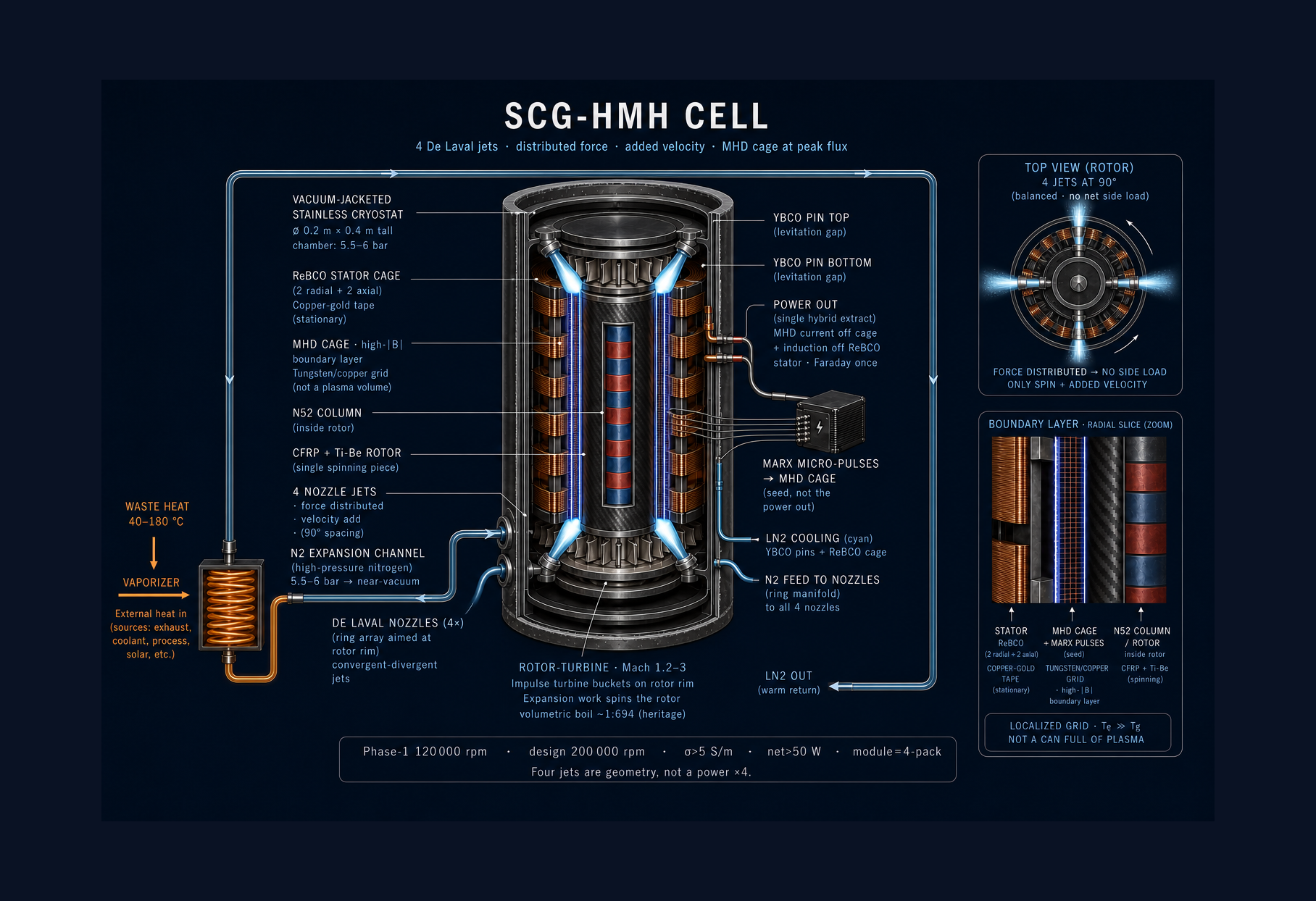
The SCG-HMH Generator in simple terms
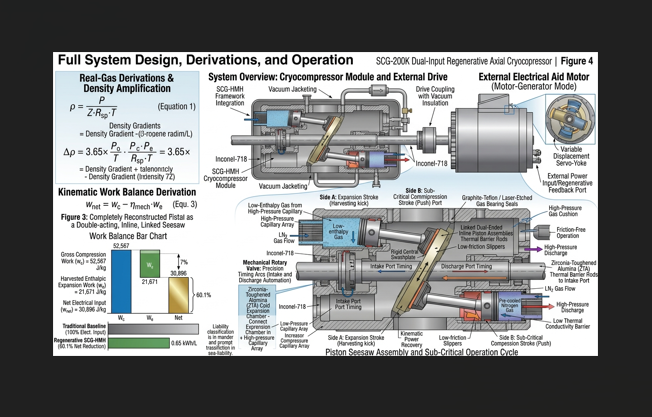
The SCG-HMH is a small, cold engine that converts leftover heat into electricity and, later, a jet. It uses liquid nitrogen and superconducting magnets. A compact rotor levitates without physical contact, held in place by magnets frozen to nitrogen temperature. Heat, whether from a factory, a computer server, or solar energy, boils the nitrogen. The expanding gas spins the rotor and can be expelled through a nozzle to create thrust. Additional superconducting coils and a cold plasma system are planned to further enhance power generation. This is not a finished product, but a published design, with Phase-1 bench tests for levitation, high-RPM rotation in the gas path, and measurable nitrogen jet propulsion coming
Who this innovation is for
We aim to reach everyone—from the general public curious about new energy solutions to potential collaborators and fellow peers. If you are concerned about energy bills, climate change, or the future for coming generations, the simple concept of turning waste heat into power using liquid nitrogen and a floating rotor should resonate. For potential collaborators, we seek machinists, cryogenics technicians, rotor-dynamics specialists, nozzle testers, and laboratories experienced with liquid nitrogen, as well as those who can fund or host Phase-1 bench tests. Experts in thermodynamics, HTS bearings, two-phase flow, plasma, and MHD are invited to scrutinise and contribute to our Zenodo stack. If you fall into any of these categories, you are in the right place.
The promise of a buildable future
Imagine a future where clean power does not rely on a miracle furnace. The SCG-HMH is a cold, buildable idea: it uses leftover heat, liquid nitrogen, and a rotor that floats on superconducting pins and spins in a gas stream, producing thrust from a nozzle. This is firmly supported by physics and is something to be truly excited about. Its inherent safety is paramount; nitrogen is inert, non-flammable, non-toxic, and constitutes 78% of the air we breathe. Unlike systems involving combustion or high-temperature fusion, the dangerous elements are standard engineering concerns like high RPM and cryogenics, which are managed with robust containment vessels, burst disks, and controlled start-up procedures. This cold, sealed-loop system offers a gentler approach compared to traditional boilers, fuel storage, or fusion reactors. Moreover, it is designed for efficiency where others fail. While coal, gas, and most servers discard warmth as waste, this machine is specifically engineered to harness that lost energy.
"The SCG-HMH represents a paradigm shift, turning what we consider waste into a valuable resource for clean energy. It's truly inspiring."
A leading expert in cryogenic engineering

Groundbreaking aspects of our generator
- Abundant energy from waste heat: The SCG-HMH is designed to harness the world's discarded heat—from factories, grid losses, and server farms. If the loop functions as intended, power transitions from a scarce commodity to a natural consequence of activity. More industry, computing, and life support would translate into more heat transferred to the nitrogen, generating more electricity.
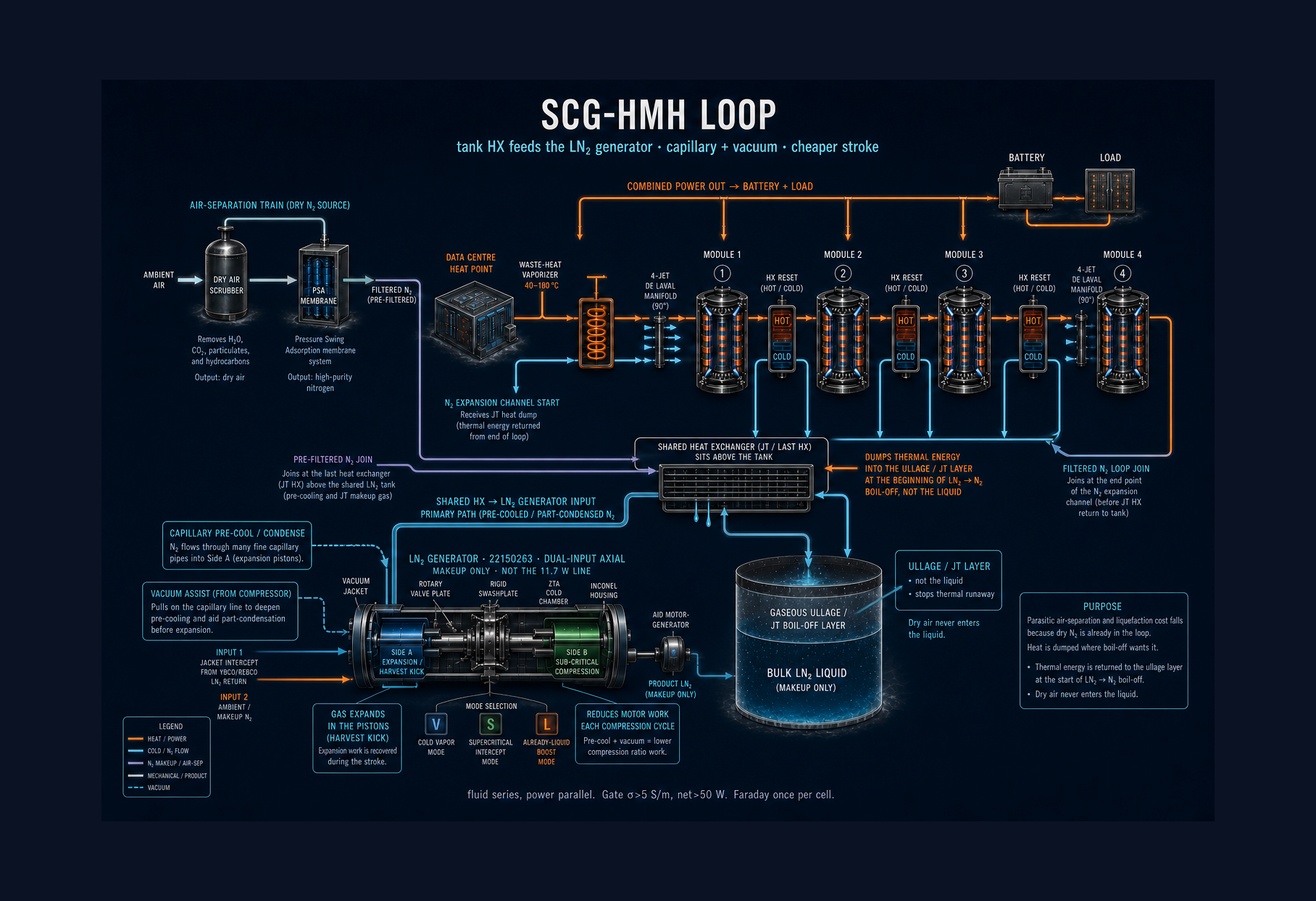
- Self-powering supercomputing: Servers are essentially heaters with a computational purpose. This design directly integrates their waste heat into the liquid nitrogen system. The machine that computes can contribute to the energy required for its operation. Whether on a starship or in a data centre, computational power not only consumes energy but also fuels the "boiler" through cold expansion and a levitating rotor.
- Limitless potential, in layers: The journey begins with a levitated rotor, ensuring clean, high-RPM rotation within the vapour path and a nozzle that generates thrust. Subsequent phases will introduce coils, cold plasma, hybrid MHD, and modular units for industrial applications, ultimately leading to the TITAN Starship. The core principle remains consistent: cool magnets, expand nitrogen, and generate power and thrust.
